


Melilotus officinalis - sweetclover

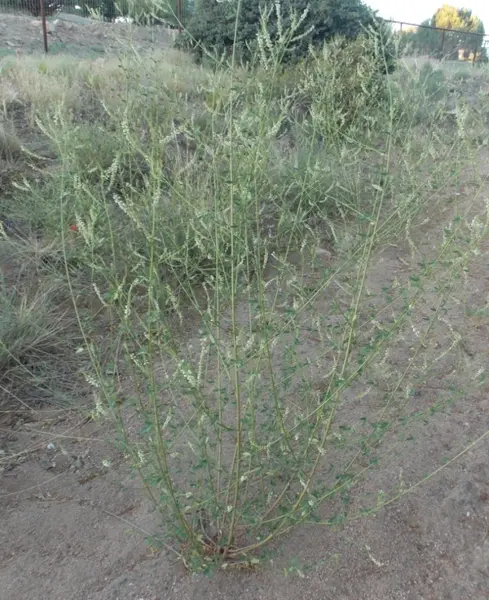
This plant is called Melilotus officinalis (Synonyms: M. alba, M. arvensis, M. leucantus, M. lutea, and Medicago officinalis). Melilotus is from the Greek word “meli”, meaning honey and “lotos”, meaning a leguminous plant. Common names include sweetclover, white sweetclover, and yellow sweetclover.
This introduced biennial or annual tends to get around 2 to 10 feet tall. It is widely branched and leafy with tiny white or yellow pea flowers in numerous spikes. It grows from a long taproot. The leaves are arranged alternately and are short stemmed, pinnately compound with 3 oval leaflets. The flowers are pea-like, tiny and white or yellow, which are born on elongated stalks. It produces a black, plump, ribbed pod.

The habitat is found in elevations under 8,000 feet along roadsides, riverbanks, and old fields where soil has been disturbed. It often forms dense patches. It grows in full sun or partial shade but cannot tolerate dense shade. It prefers limestone and loamy soils.
This plant is eaten by livestock and wild ungulates. Dabbling ducks use it as nesting habitat (mallards, gadwalls, and teals), and many other birds use it for both habitat and food. It is a host plant for Spring Azure and Eastern-Tailed Blue butterflies.

I was excited to read about this plant in my book “American Honey Plants…” when researching plants that produce a significant amount of nectar and/or pollen for our bees. The white sweet clover (Melilotus alba) and the yellow sweet clover (Melilotus officinalis) are very valuable for honeybees. The yellow sweet clover blooms about 2 weeks earlier than the white and where both are present, a long honey flow may be expected! That is great news because they are in bloom right now along our street and Williamson Valley area.
For more information about this plant, please visit our Yavapai County Native & Naturalized plant database here: https://yavapaiplants.extension.arizona.edu/SpeciesDetailForb.php?genus=Melilotus&species=officinalis
Here is another reliable website: https://swbiodiversity.org/seinet/taxa/index.php?taxon=Melilotus+officinalis&formsubmit=Search+Terms#
My book that I referred to is: “American Honey Plants, Together With Those Which Are of Special Value to the Beekeeper as Sources of Pollen” by Frank Chapman Pellett.
Please visit me online at www.peasbeewithewe.com
You can also view the following:


Comments